Why Family Game Night Matters
By Felicity Frey
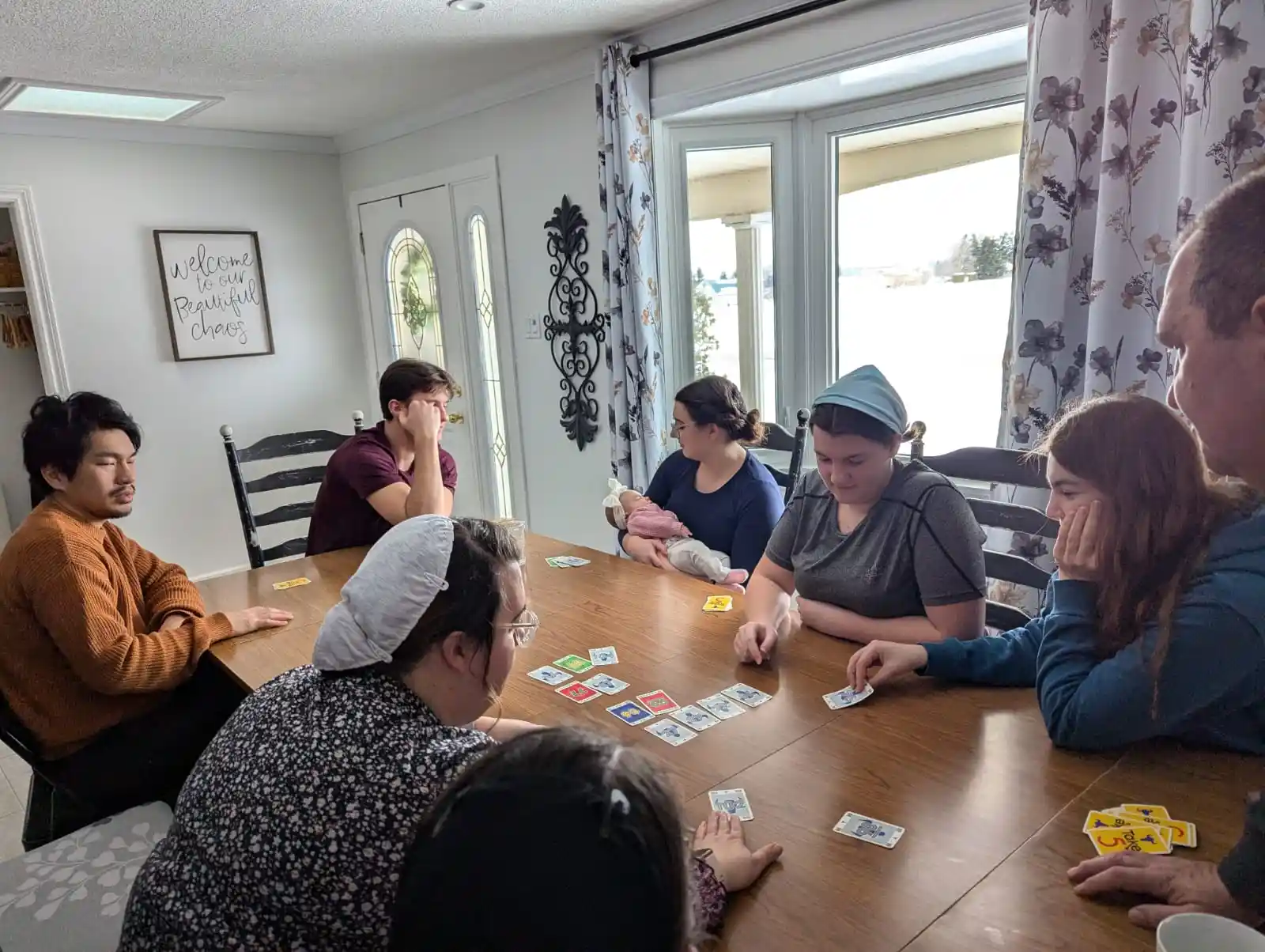
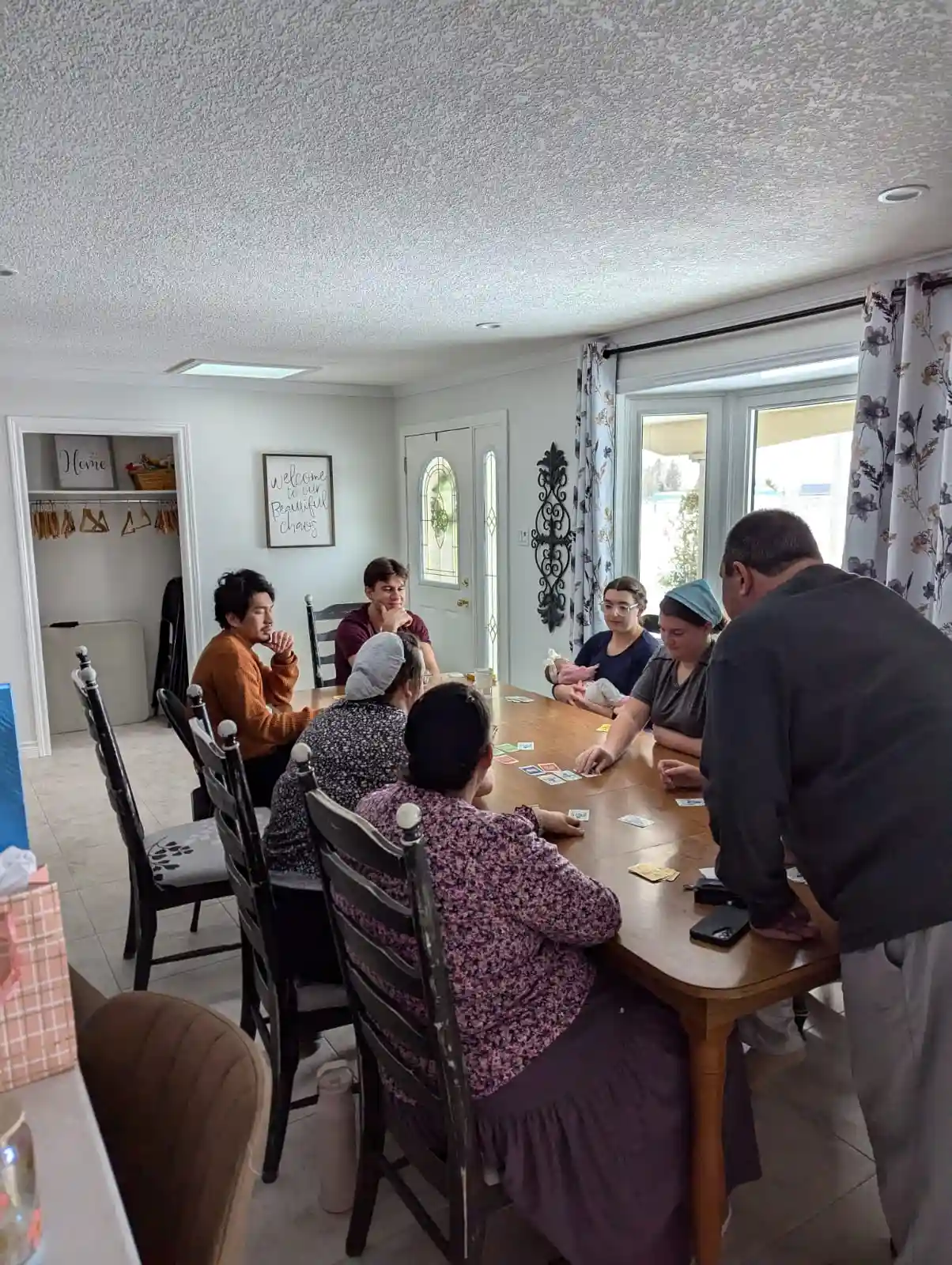
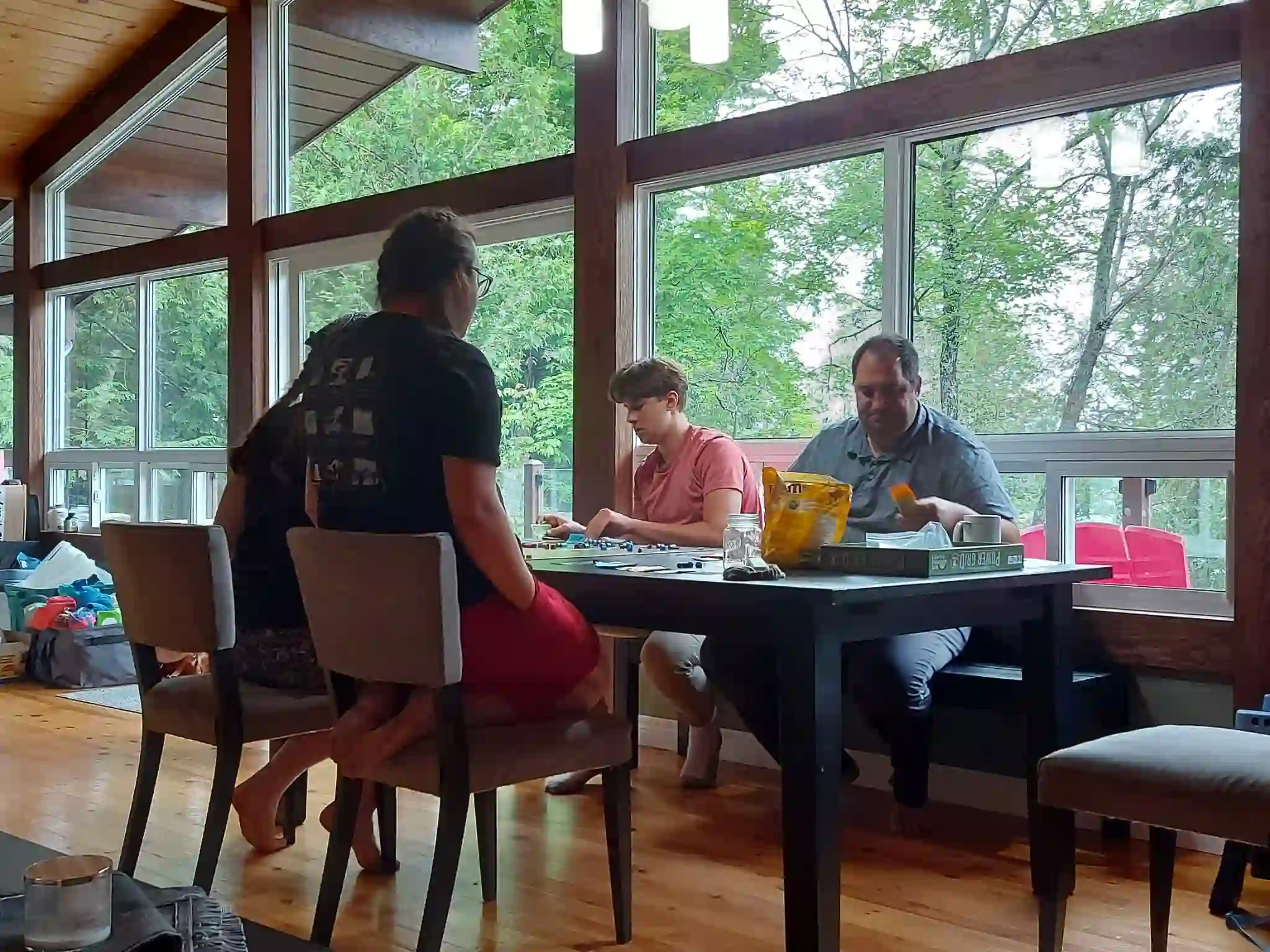
My family has an overflowing game closet, and we’re known for games being our go-to leisure activity. My sister can regularly be seen lugging around her “games bag”, a duffel bag on wheels stuffed with her favourite board and card games for taking to social events. We don’t have a formal game night, but whenever we have time together, it’s where we naturally land. Even now, in a busy season of adulthood, gathering around the table still feels like our “home base.”
If you don’t have an automatic activity pick for family time, I highly encourage implementing game night. Even if table-top games aren’t your favourite, playing games around the table is a great way to connect, without any pressure of picking a topic of conversation. My mom said, “For me it’s the togetherness even if I don’t enjoy the game chosen. It’s so special to me to see all the faces of my loved ones around the table.” In a world that often pulls families in different directions, time spent together like this reflects the value of community and intentional living we’re called to.
An organized family game night is an excellent opportunity to develop fundamental skills, provide a healthy atmosphere for competition, and create a space for laughter and connection.
It’s More Than Just a Game
For many families, games are a natural way to learn and grow together, not just entertainment. As my sister-in-law pointed out, “For younger kids, games can be used to teach new concepts or to grow their understanding of problem-solving.” A hands-on way for kids to develop real, practical skills is disguised as simple play.
Even simple games can help develop practical skills like:
Planning ahead – thinking beyond the current turn
Problem-solving – finding new approaches when a plan falls apart
Evaluating risk and reward – learning when to play it safe or take a chance
Adaptability – shifting strategies as the game changes
Observation – paying attention to how others play and learning from it
Games also encourage strategic thinking, giving players the chance to practice natural and low-pressure decision-making. Opportunities to plan ahead, pick between options, and adapt to change happen with every turn. Over time, these small decisions build confidence and strengthen critical thinking abilities.
Why Sitting Around the Table Matters
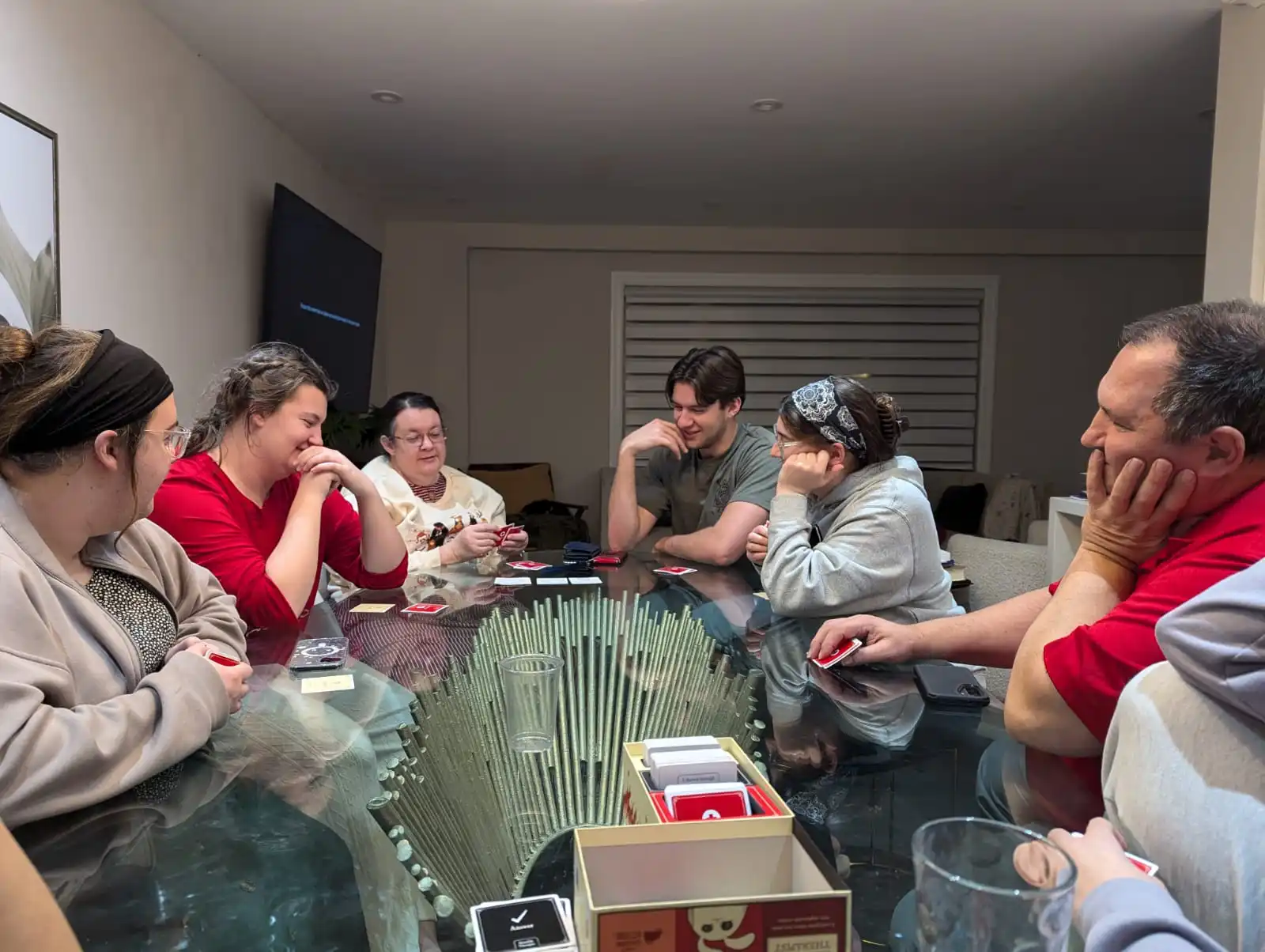
Even once you consider your skills fully developed, playing games together is a great way to get everyone around the table. My family has all reached adulthood, and those of us that still live at home are in and out of the house frequently. Games offer us a chance to relax and have fun together in a quick and convenient way. My sister shared, “We have had so many great laughs around party games and you get a chance of stress relief to laugh and be goofy with the people you love.”
In a generation of technology and busier-than-ever lives, families are struggling to stay connected. Fewer and fewer families share an everyday meal together, let alone set aside intentional time for connection. For my family, games make slowing down and spending quality time together easy. There is no exhaustion in trying to come up with new ideas or things to try, we know what we are going to do.
At the same time, games reinforce important values and morals, like:
Patience – waiting for turns and respecting the pace of the game
Honesty – following the rules, even when it’s tempting not to
Humility – winning with grace and losing with perspective
Encouragement – celebrating others and building them up
Perseverance – sticking with something, even when it’s challenging
My brother-in-law, who joined our family from the other side of the world, shared his perspective, “I used to not have the understanding of the seriousness in playing games, cheating or bending the rules, because people in my community growing up just did that. … However, since I learned about the love of honesty and joy of losing and playing with well planned cheating like strategy (not actually cheating), I realized that what matters is the togetherness and the moral & mental lessons through the game.”
Recommendations to Make the Most of It
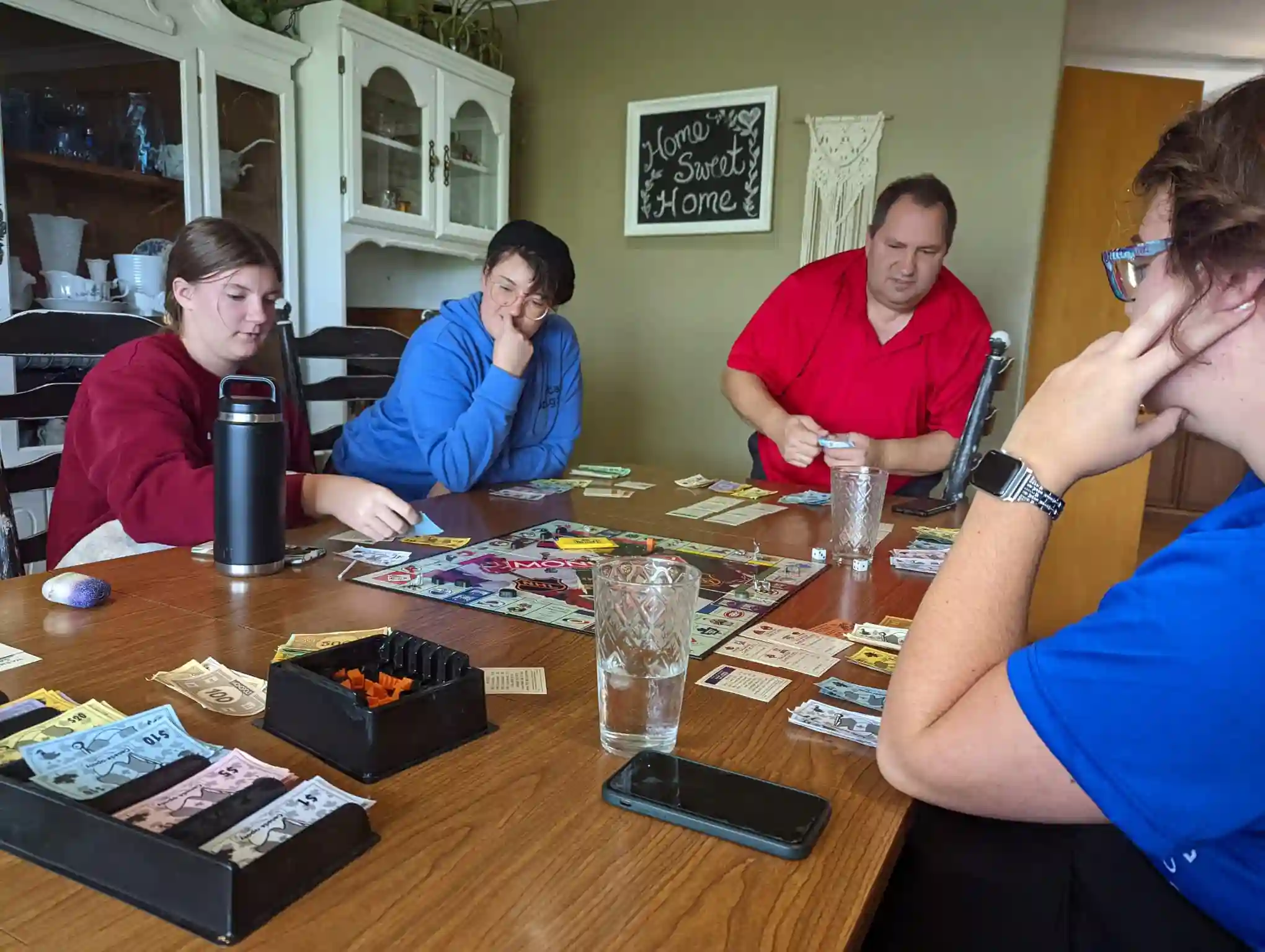
I realize that not everyone, and not every family enjoys games as much as we do. Believe it or not, our family does not enjoy every game, and not always the same games either. My eldest sister and mom prefer a social-based game, while my dad, brother and second sister all lean toward complex strategy. My youngest sister and I are often just along for the ride, enjoying a good mix of both. The great thing about games is that there are so many options out there, and you don’t have to play the same one every time.
If finding a time that everyone is free, a game that everyone likes, and a routine that works seems daunting, focus on laying the foundation until coming together to play a game feels natural. Set aside one night a week to try a new game with whoever is available, and prioritize this as family time.
Here are a few practical ways your family can be intentional about prioritizing and making the best of this time:
- Rotate who chooses the game
Switch it up frequently to allow everyone a chance to try one they like. - Try new games
There are thousands of options out there, don’t be afraid to keep trying new games until you find one your family enjoys. Our family often ends up going through phases, playing a game repeatedly for a few weeks (or months) before we rediscover a new one or someone gets a new present. - Know your family dynamic
Are you a casual or competitive family? Certain games may not work in your household, causing fights over connection. - Change up the teams
Try not to have the same “teams” every time. If the game requires teams or partners, try to pair up older and younger siblings to encourage mentoring and teamwork. Let different groups of people work together in order to avoid family divides and encourage deeper connection. - Take the game at a pace that fits your family
Some games might require more/less time. My sister and I can whip through Ticket to Ride in about 20 minutes if we want to. We’ve played it so often, we sometimes speed run it if we don’t have much time. If you are learning, or have younger kids, slow it down and pause to talk through decisions in strategy games. - Model good sportsmanship
Games can get very competitive, most of them end up with a winner. If your kids are younger, focus on the winner less and the challenge more. Try not to get overly invested, to the point of arguing with your family over the game. I do not play Bohnanza with my siblings, because I get too upset with them over it. If your family is older, board/card games can be a great environment to explore some of that healthy competitive spirit, without being bad sports about it.
Family game night doesn’t have to be structured or perfect. In our home, it rarely is. It’s loud, chaotic, and snacks are flying everywhere. We’ve been laying this foundation for family time as long as I can remember, which means sometimes it’s spontaneous, sometimes it’s planned, sometimes it’s short, and sometimes it stretches late into the night. What matters is the consistency of coming back to it, the routine of gathering, playing, and being together.
Our Family Favourites
Here are a variety of my family’s favourite games, giving you a list of ideas to start your own collection for family game night.
Ticket to Ride
Comes in many different versions for more players or different locations, but my favourite is still the original. A great choice for a medium level of strategy and competition.
2-5 Players / Ages 8+ / 30 – 60 Minutes
Telestrations
Extremely easy, very entertaining, and requires little instruction. Telestrations is Telephone and Pictionary put together in a brightly coloured box. A perfect game for less competitive families.
4-12 Players / Ages 8+ / 20- 30 Minutes
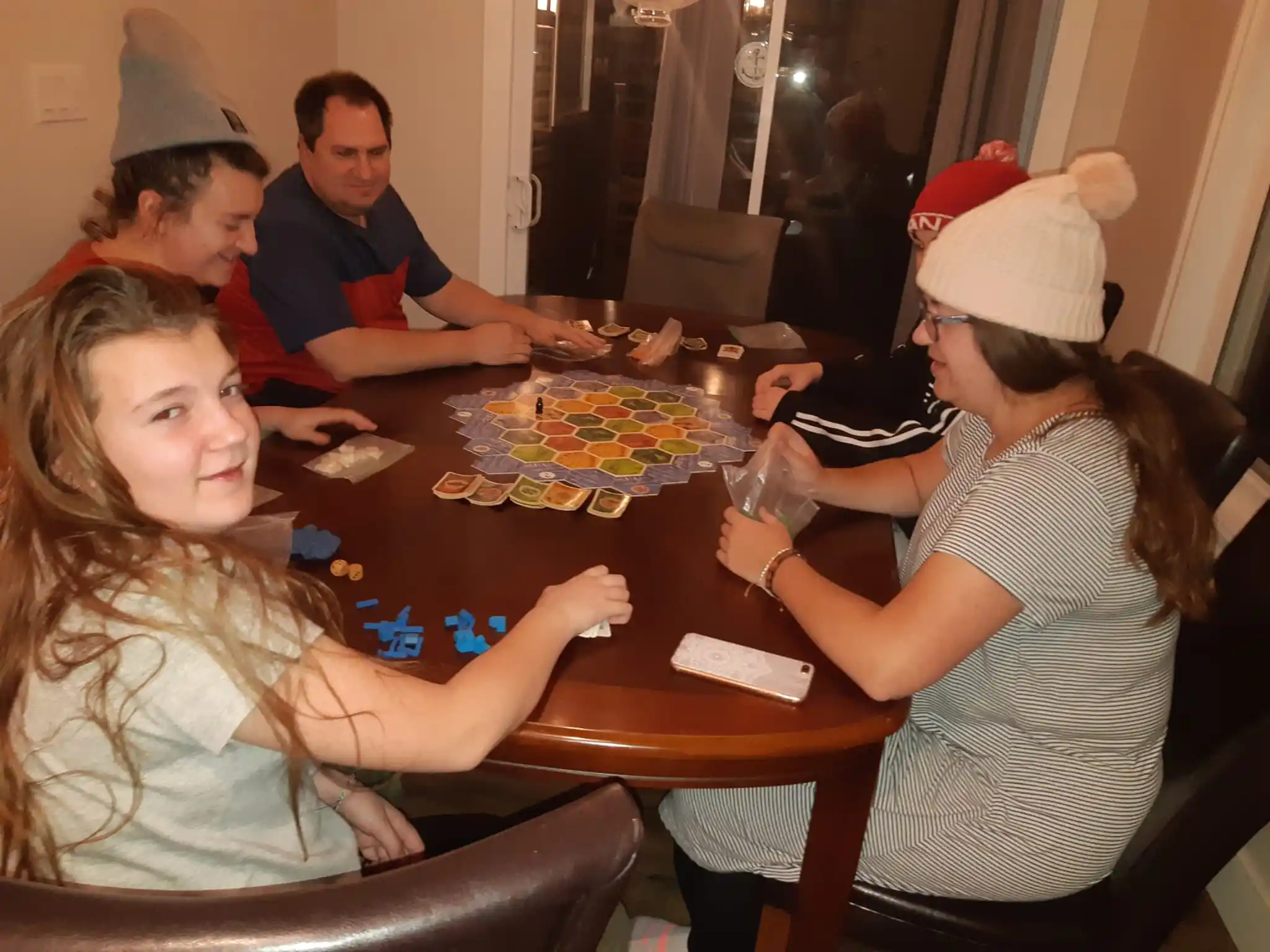
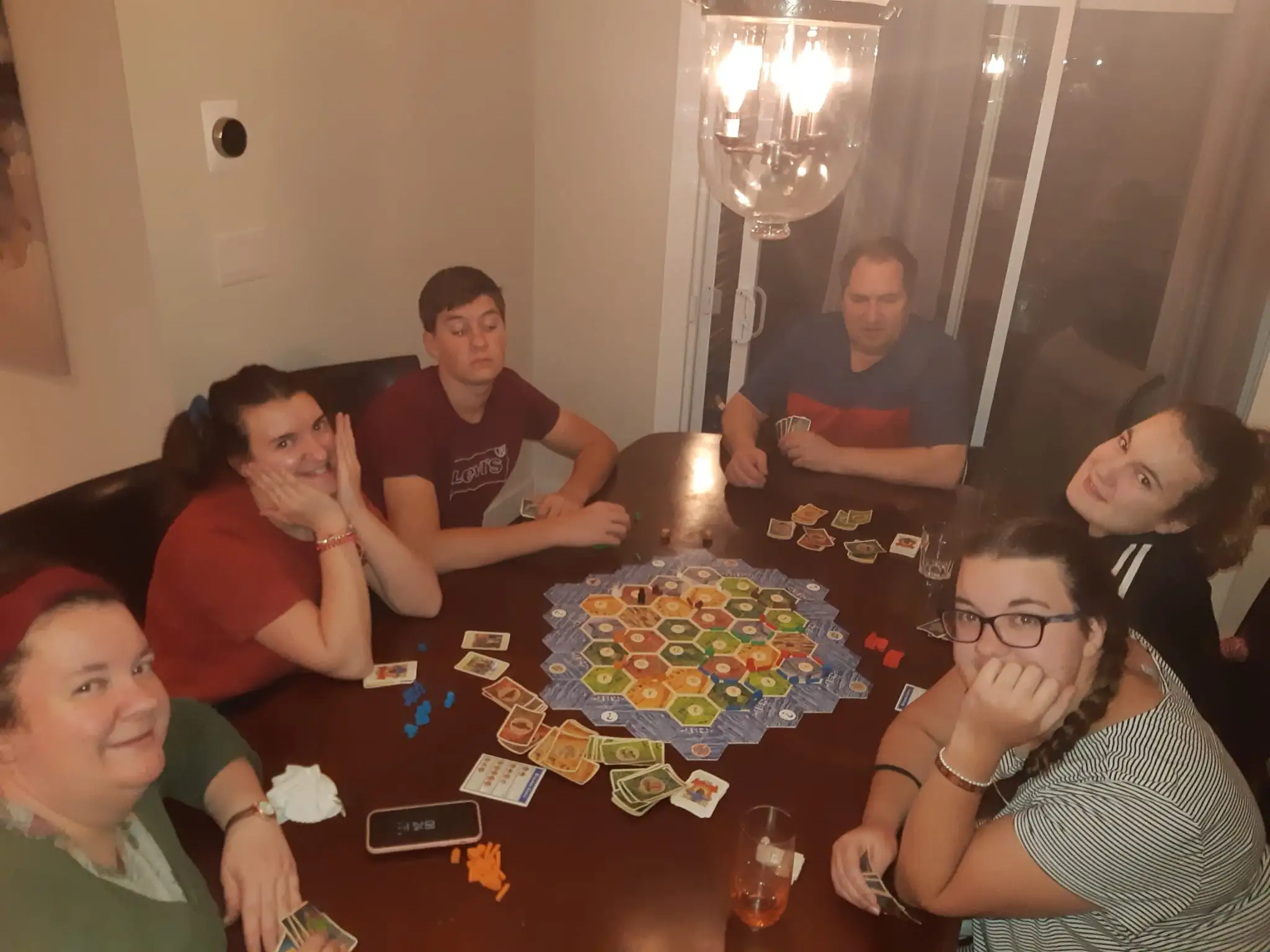
Catan
A well-loved classic that’s all about collecting resources, building, and a little bit of friendly competition. It’s easy to pick up, but offers plenty of strategy as the game goes on. A weekend favourite.
3-4 Players / Ages 10+ / 60 – 120 Minutes
Codenames
Easy to learn, and often a crowd favourite. Give clever one-word clues for your team to guess the right words before the other side does. A great mix of strategy and fun and a good test of your communication skills.
4-8+ Players / Ages 10+ / 15 – 30 Minutes
Boggle
Very simple, quick to play, and easy to explain. Boggle is a fast-paced word search where players race against the clock to find as many words as possible. A great option for all ages, and you can be however competitive you want to be.
1-8 Players / Ages 8+ / 10 – 15 Minutes
Phase 10
Simple numbers, with a fun mix of luck and strategy. Complete each phase before the other players by collecting sets, runs, and more. A great choice for relaxed, slightly competitive game nights.
2-6 Players / Ages 7+ / 45 – 60 Minutes
Splendor
Simple to pick up, but full of opportunities for strategy. Collect gems and buy resources. A great option for players who enjoy a quieter, slower-paced strategic game.
2-4 Players / Ages 10+ / 30 Minutes
I hope your family finds game night as valuable as we do.
The Frey Family
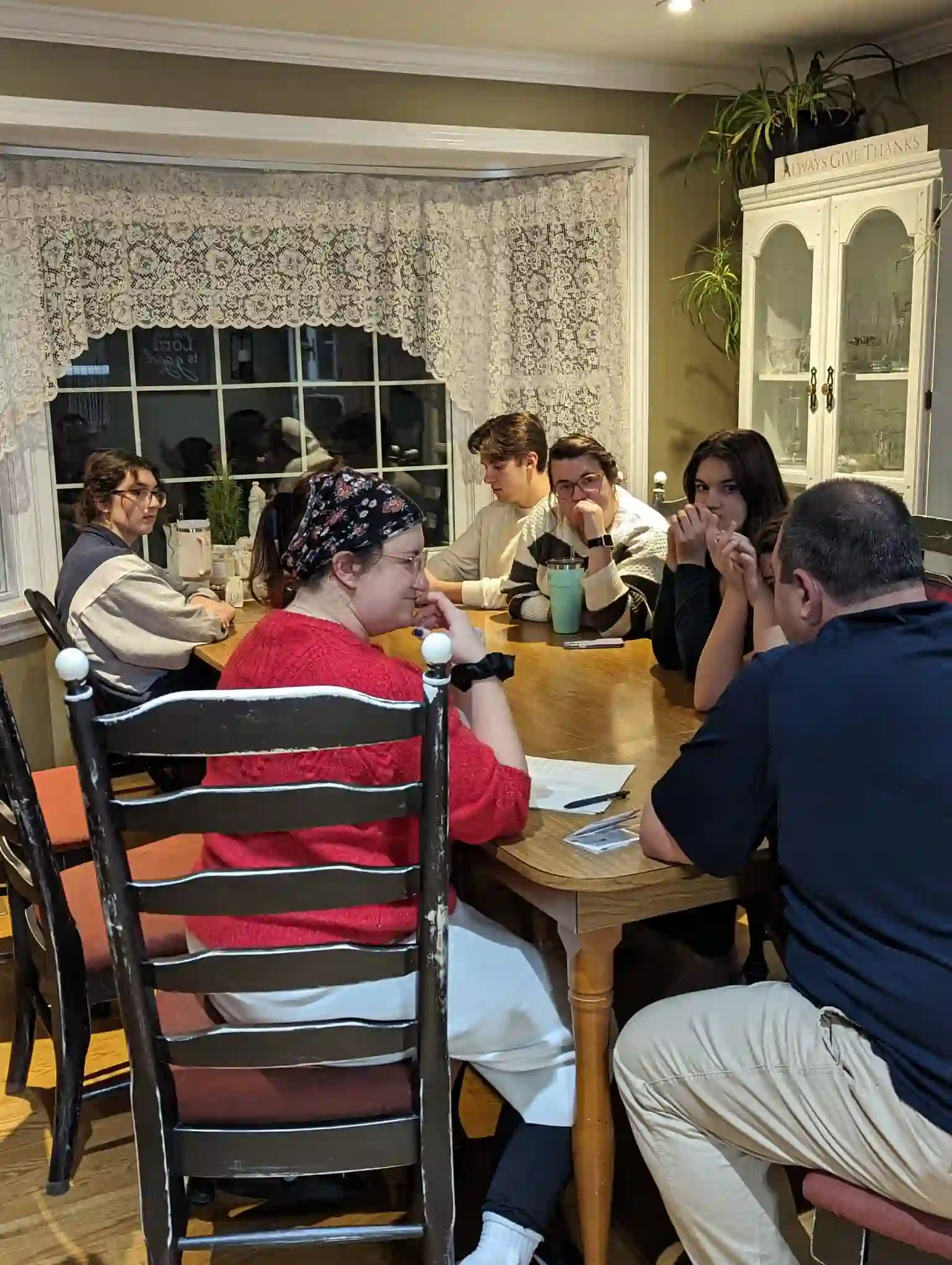
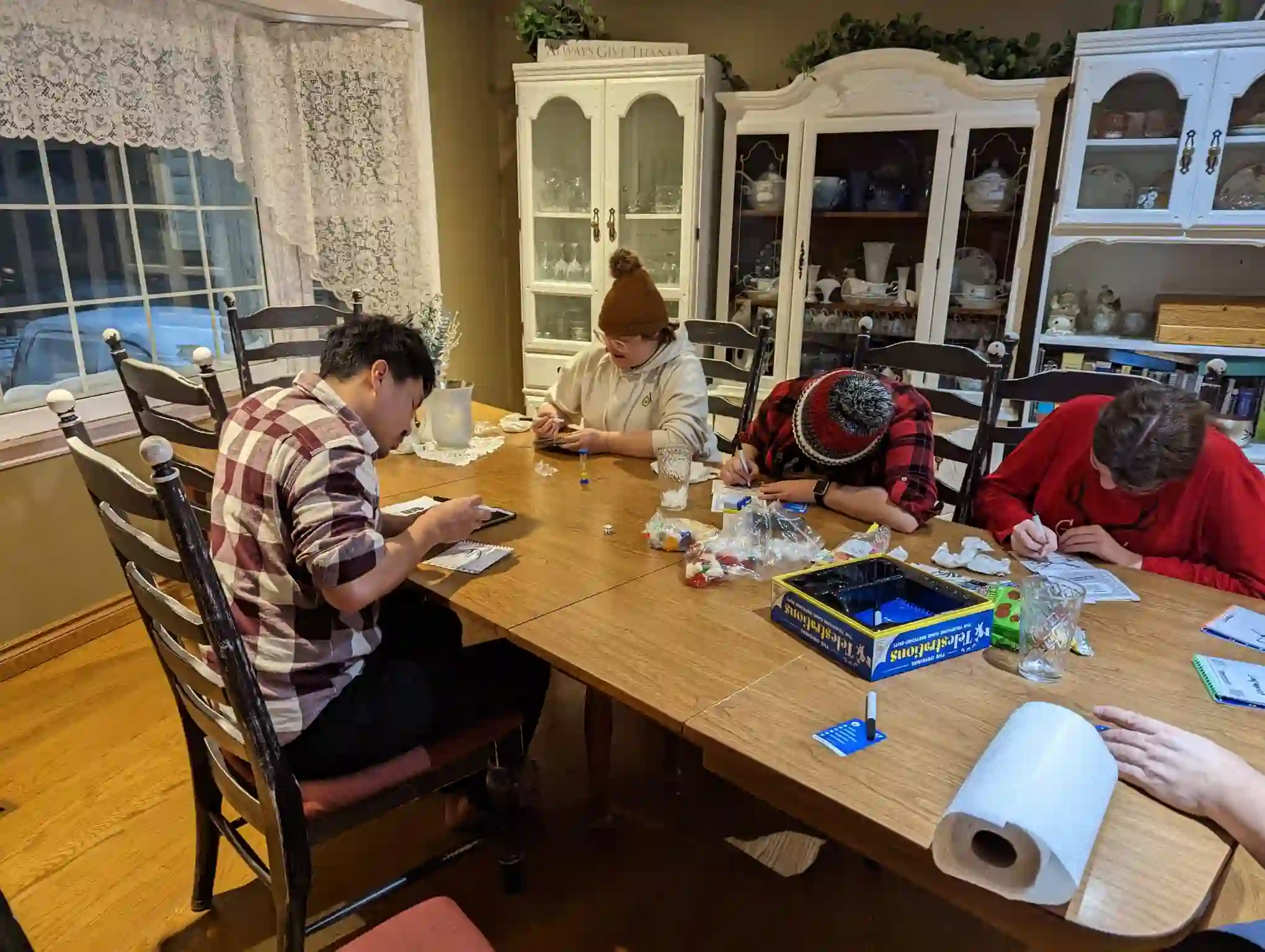
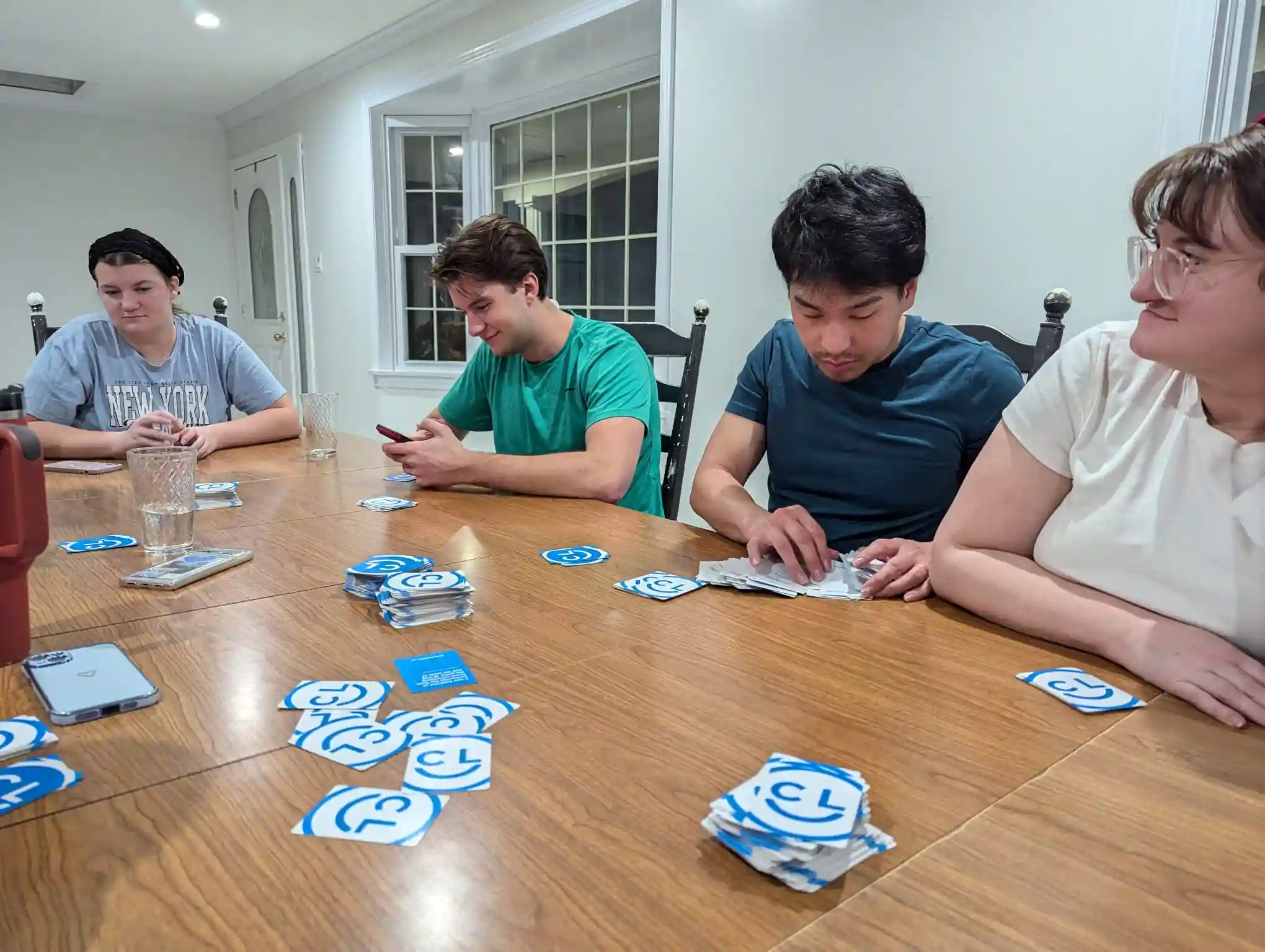
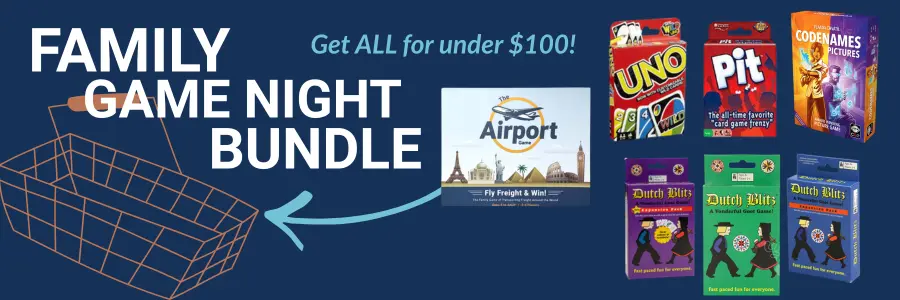
I’ve put together a special family game night bundle for you, with a variety of game types and styles for your family to try. Shop this bundle online from now until March 31st.