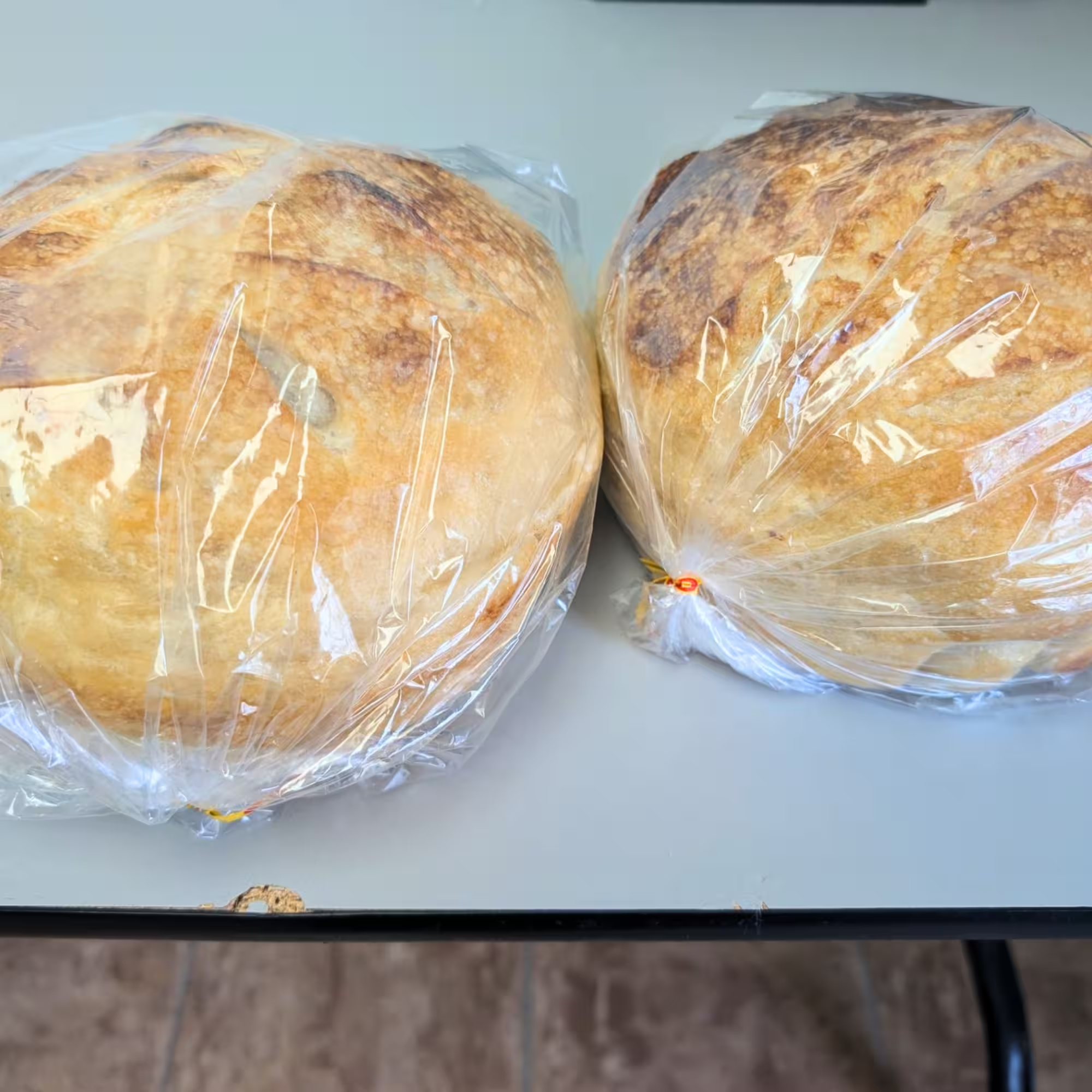
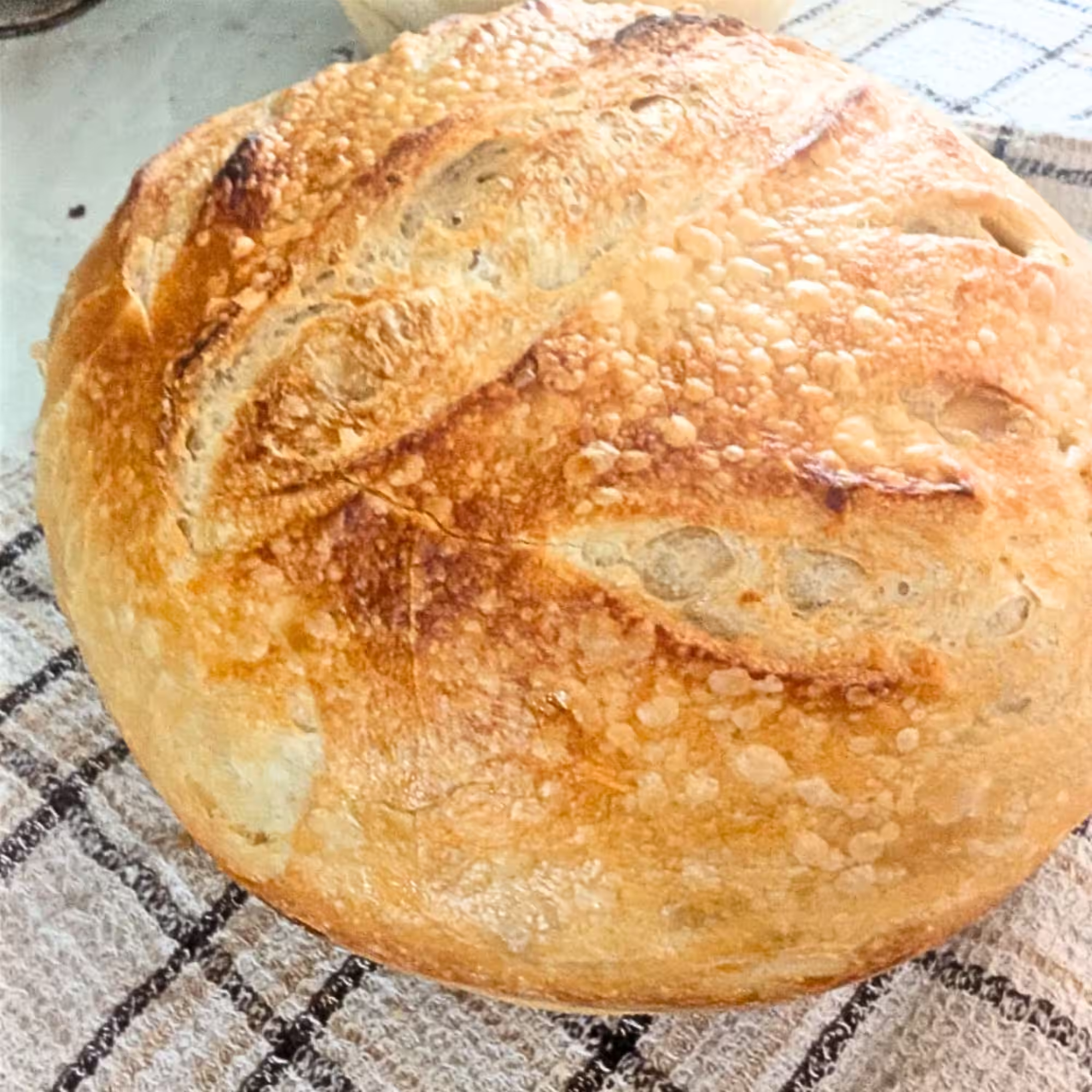
Welcome to The World of Sourdough!
This has become a trend over the last number of years and for good reason. Have you had a slice of sour dough toast with butter? There really isn’t much that tops this. It goes so well with some over-medium eggs for breakfast, a bowl of soup for lunch or even just with apple butter for a tide-me-over snack.
I grew up comfortable with yeast baking. We made a batch of bread every day during the summer to sell at our roadside stand. I expected the transition to sourdough to be an easy one but I had some bumps I did not expect. To some extent, it does deserve the reputation of being a difficult project to take on. I can’t claim to have mastered sourdough baking but I am here to say that the journey is worth it.
One good reason to try it is for the health benefits. Many people find they feel better on it and have reduced cravings for sugar. This holds out scientifically. The culture in the sourdough is similar to yogurt or sauerkraut and feeds the healthy gut bacteria. “The presence of lactobacilli itself in fermented sourdough contains probiotics and prebiotics which aid in digestion” (https://pmc.ncbi.nlm.nih.gov/articles/PMC8306212/#sec3-microorganisms-09-01355) This article is quite science-y but we all know that probiotics and prebiotics are a good thing, right? I most definitely notice a difference when I eat sourdough and expect you will too.
The first thing I made with sourdough was waffles and I suggest starting with that. It is quick, easy and almost fool proof. Feed the starter several times until it is nice and bubbly, measure out one or two cups of starter (remember to save at least ¼ cup and put back into the fridge), add a few ingredients and mix up. It really is that easy!
Everything Sourdough has a recipe I like to use on page 9. These waffles (or pancakes) are best hot off the griddle when they are still crispy. They are so light and airy and will make any other waffle seem inferior. Serve them with fresh fruit, yogurt and a drizzle of maple syrup or just go all out and slather with butter or peanut butter and drench with maple syrup.
I have also simmered blueberries or raspberries with maple syrup for a fruity sauce that is delicious and cuts down on the sweetness of straight maple syrup. Another variation I have done is add ground flax seed to the batter for all its wonderful health benefits. This will make them a little heavier and less airy but still delicious. For chocolate lovers, I am sure you could add chocolate chips to the batter or spread with Nutella.
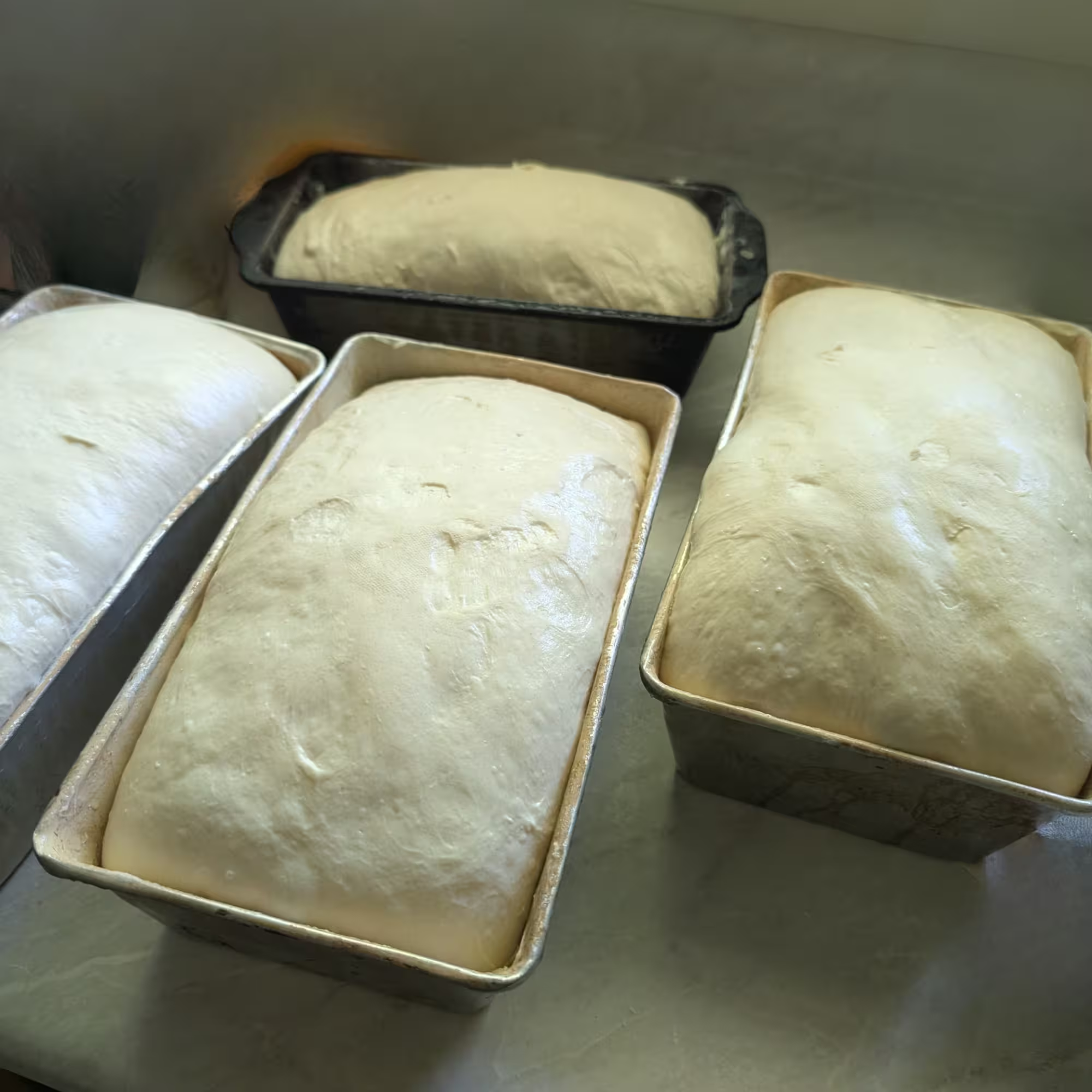
Making bread has been more challenging for me. Here are a few of the unexpected things I ran into:
- Starter that didn’t fully double
- Starter that became very sour
- Complicated recipes with many steps that overwhelmed me
- Conflicting messaging (such as… “Don’t let the dough touch anything metal”… “Use a mixer and mix for 15 min” or “Let rise until double before baking”… “Shape and put into oven immediately” -which is it???)
- Different dough structure than yeast bread
Let’s go through each one and hopefully demystify it.
Starter that doesn’t double
Your starter will double… eventually, unless you killed it. Like regular yeast, too high heat will kill it, so don’t use hot water, just warm. It can be placed in an oven with the light on to warm it up if the kitchen is cool but don’t try turning the oven on, even low is too hot.
Instead, keep feeding it every 4 to 6 hours with equal amounts of starter, flour and water. After 3 -4 feedings it should be quite active, even if it came out of the fridge.
Also, somewhere I picked up the tip that the starter should float. I find this easier to test than the doubling method. Just put a little water in a cup, add a drop of starter and see if it sinks or floats. If it sinks, feed again and try in another 6 hours.
Starter that became very sour
I have learned to keep my starter in the fridge. I don’t remember to keep it fed every day and nor could I possibly use up that much starter. It’s when it sits on the counter unfed by the day, that it becomes too sour. Even then though, adding a small amount of baking soda dissolved in a little bit of water, will do away with that flavor. (For people who really don’t like the sourdough taste at all, a little baking soda in any recipe will neutralize that flavor without affecting the rise.)
If the starter has been in the fridge quite long without being used (a month or more) you can pour off the grey liquid at the top, feed it and keep on going.
Complicated recipes with many overwhelming steps
Start with something very simple, like the waffles. I have also made muffins with sourdough starter in it that went into the fridge overnight and I baked them the next day. So easy and great for building confidence. Adventures in Sourdough has a delicious looking Blueberry
Cream Cheese Muffin recipe on page 48 that I want to try. I would probably add some lemon zest to the batter for my favorite lemon-blueberry combination!
Making bread spans at least two days if you include the time needed to get the starter out of the fridge and activated. For me, I plan when I want to bake the bread and then work the time backwards for when I need to get the starter out of the fridge. Truthfully, it is more of an ideal project for stay-at-home moms than it is for someone who goes to work every day. It can be done but I do find it challenging. Too often I have had to bake the bread before it had either not risen enough or it had over-risen. I make it work and am slowly getting better at predicting how long it needs but ideally a person would be at home and able to bake it when its ready.
Once you have figured out when you need to get the starter activated, just focus on one step at a time. Its really not complicated or even time consuming steps, it’s just that the steps stretch out over a longer time frame than what most of us are used to.
Conflicting messaging
I don’t know what to say about this except pick a recipe with good reviews or from someone who you know has good results and then follow the steps they outline. With time, you may find your own way but mixing recipe theories has gotten me mixed results.
Different dough structure than usual yeast bread
Sourdough dough feels different than regular yeast dough. Some recipes have only enough flour to create a shaggy batter and somehow over the rising times and some good stretch and folds, it becomes a dough. I have personally found better results with a dough that is stickier than a regular yeast dough but is more than just a shaggy batter.
The stretch and folds are also more gentle than traditional kneading. It is exactly what it sounds like, stretching and folding the dough. I don’t know how it works but it is an important part of the process to create structure in the dough so it holds its shape for a rise.
So there you have it, some of the things I have learned about sourdough. Even though my bread does not always turn out beautiful (sometimes it does!) its still not wasted. It can always be used for French toast, stuffing or breakfast casseroles. I have already dried it out and turned it into bread crumbs for breading chicken schnitzel or with butter for on the top of mac and cheese.
Have you tried making anything with sourdough? If you haven’t, hopefully my experiences will give you the courage to step out and try it. You don’t need to fully commit to making everything sourdough or take on more challenging recipes, to still enjoy some simple, delicious baked goods. Your gut and taste buds will thank you!